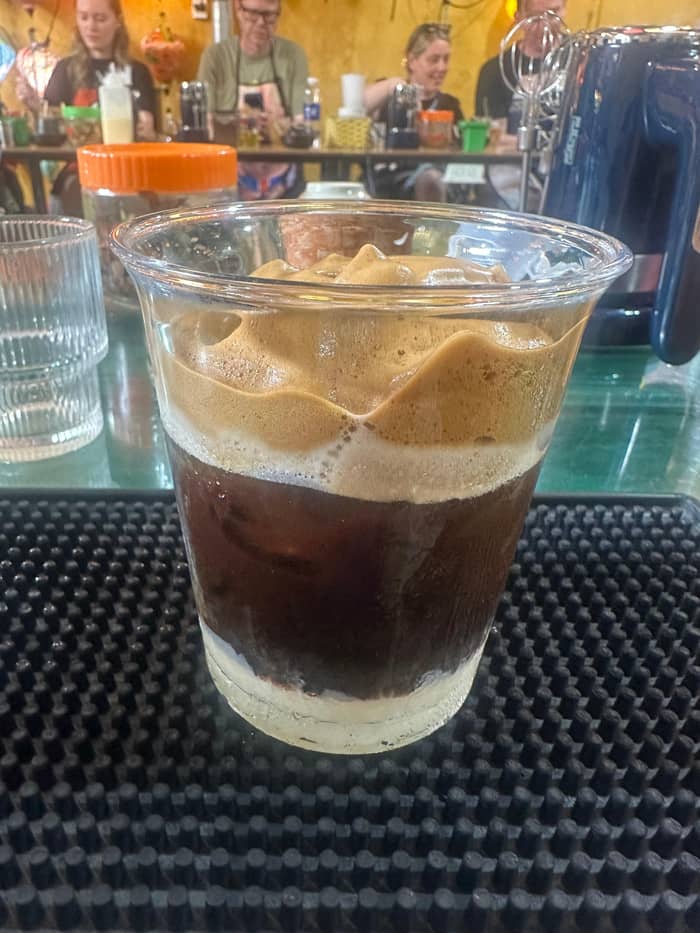
Our class
Hoi An coffee class
Styles from crop to cup
- Length2 hours
- Reviews5,442
- Taught inEnglish, Vietnamese
Guides
Language
Currency
See availability$14 and up · free cancelGroup price calculator
Compare all 3 options
Set your party and compare three classes.
≈
View≈
View≈
ViewStarting prices as on the booking platform, converted at the ECB reference rate. You see the exact price at booking.
A plain explanation of what makes a cup in Vietnam its own thing, from the robusta grown in the Central Highlands to the small metal filter and the sweet milk that finish it.
Editorial team, vietnamesecoffeeclass.click · Updated November 16, 2026 · Takes 7 min
Overview
Ask what Vietnamese coffee is and the first answer is about the bean, not the cup, and nobody in Vietnam apologizes for the bitterness; it is the starting point that the rest of the glass is built around. According to the national tourism authority, a traditional Vietnamese cup starts from robusta, a bean with a strong, bitter taste.1 The same authority puts robusta at the heart of the country's coffee identity and calls it bold, intense and deeply aromatic.8
The species differ in more than flavor. The US International Trade Commission describes robusta as a hardier species with a higher caffeine content than arabica, better able to cope with heat, lower altitudes and drought.9 The same agency adds that robusta is mainly used for instant coffee and for blends, so a glass of strong, phin-brewed robusta is a different use of the bean from the one most of the world's robusta sees.10,10
What you taste follows from that bean. Dark roasting with a touch of butter or cacao, the authority says, yields a thick, syrupy cup with hints of dark chocolate, nuts and wood.11 It is not a delicate cup and it does not try to be. If you are used to a light, fruity pour-over, expect something heavier, darker and far more bitter, which is exactly why the sweet milk and the ice turn up so often.
Anatomy of a glass
| Part | What it is | Source says |
|---|---|---|
| Beans | Robusta | Strong, bitter taste1 |
| Roast | Dark, butter or cocoa | Nutty aroma21 |
| Filter | The phin | Gravity, no pressure3 |
| Water | Hot | 90°C - 95°C18 |
| Sweetener | Condensed milk | Cuts the bitterness26 |
| Cold drink | Crushed ice | Stirred with a long spoon27 |
All parts as the national tourism authority describes them for the classic iced milk coffee.28
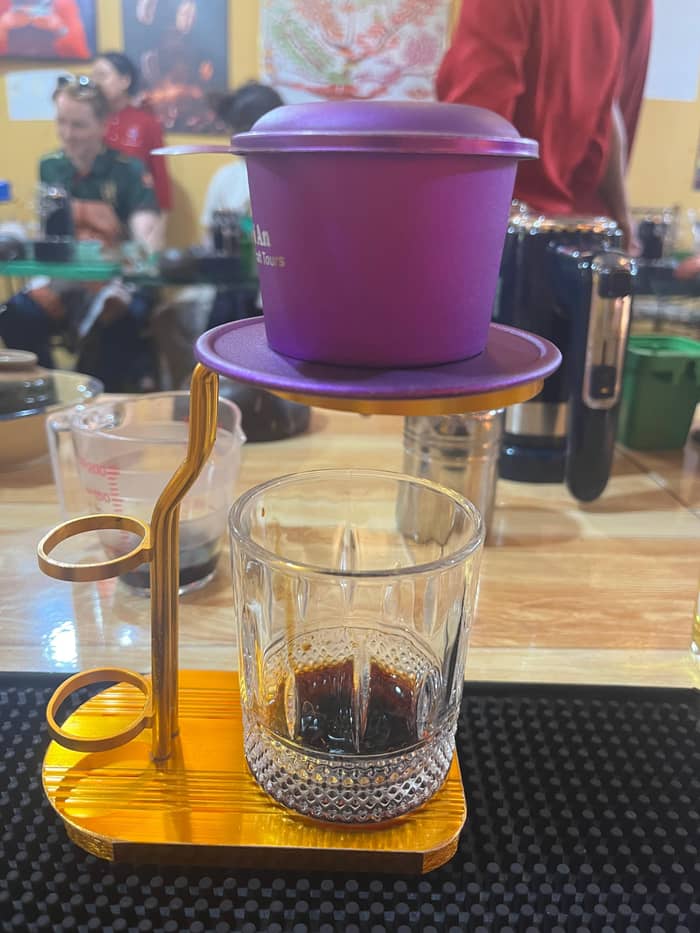
The tool that gives the drink its character is the phin. The tourism authority describes it as a small, gravity-fed metal drip filter that sits on top of the glass like a tiny crown.2 There is no pump and no steam; the brew relies on gravity and patience, the opposite of the high-pressure extraction behind Italian espresso.3 Hot water goes onto coarse robusta grounds, and the authority's own diagram gives the water as 90°C to 95°C.18
The wait is part of the point. The authority calls the phin a testament to the art of waiting, and counts the minutes spent watching it drip among the pleasures of the drink.19,20 A glass takes its time to fill, so you chat, stir or look out at the street while it does. Grounds roasted dark, frequently with butter or cocoa for a nutty aroma, are steeped in boiling water as the brew trickles through the perforated plate.21
The result is strong in the plain sense. In the authority's words the result is very bold, chocolatey and loaded with caffeine.22 That description fits how the drink is meant to be taken: a small, concentrated cup ordered slowly and drunk without hurry, hot or poured over ice. In practice you order a glass at the cafe, watch the drip, and then decide how much sweetness or ice to add.
Plain phin coffee is bitter, and the authority says so: black Vietnamese coffee is an acquired taste, and many locals sweeten it with condensed milk or mix it with ice.31 The classic pairing is cà phê sữa đá, the phin brew combined with a generous dollop of sweetened condensed milk, then poured over ice.28,27 The silky sweetness of the milk cuts through the earthy bitterness of the dark robusta, and the drink lands somewhere between sweet and bitter.26
There is a practical history behind the condensed milk. The authority says fresh milk was scarce and expensive in tropical Indochina, and locals turned to shelf-stable sweetened condensed milk instead.4 A habit that began as a workaround became the signature of the drink. The honest short answer for a classic glass is dark robusta, hot water through a phin, and condensed milk, with ice added when the day is warm.
What kind of coffee do you use for Vietnamese coffee at home? Look for a dark, coarse grind of robusta, ideally the kind sold for phin filters, since the tourism authority points to dark-roasted robusta grounds as the base.21 Arabica works as a swap but gives a different cup from the traditional glass. Many travelers bring a phin and a bag of ground coffee back as a souvenir, and the authority notes that some filters are small enough to rest on a cup.34
Your first order
Say what you like and a first order follows.
If I like sweet drinks
Cà phê sữa đá
The condensed milk cuts the bitterness of the robusta, per the authority.26
If I want something mild
Bạc xỉu
Mostly milk, with coffee as the accent.29
If I like dessert
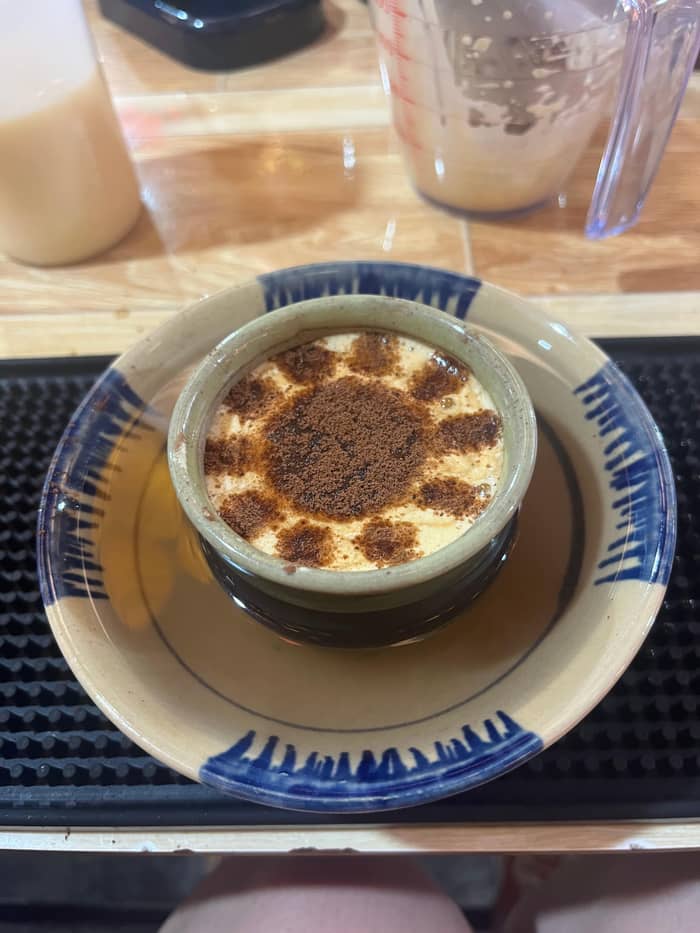
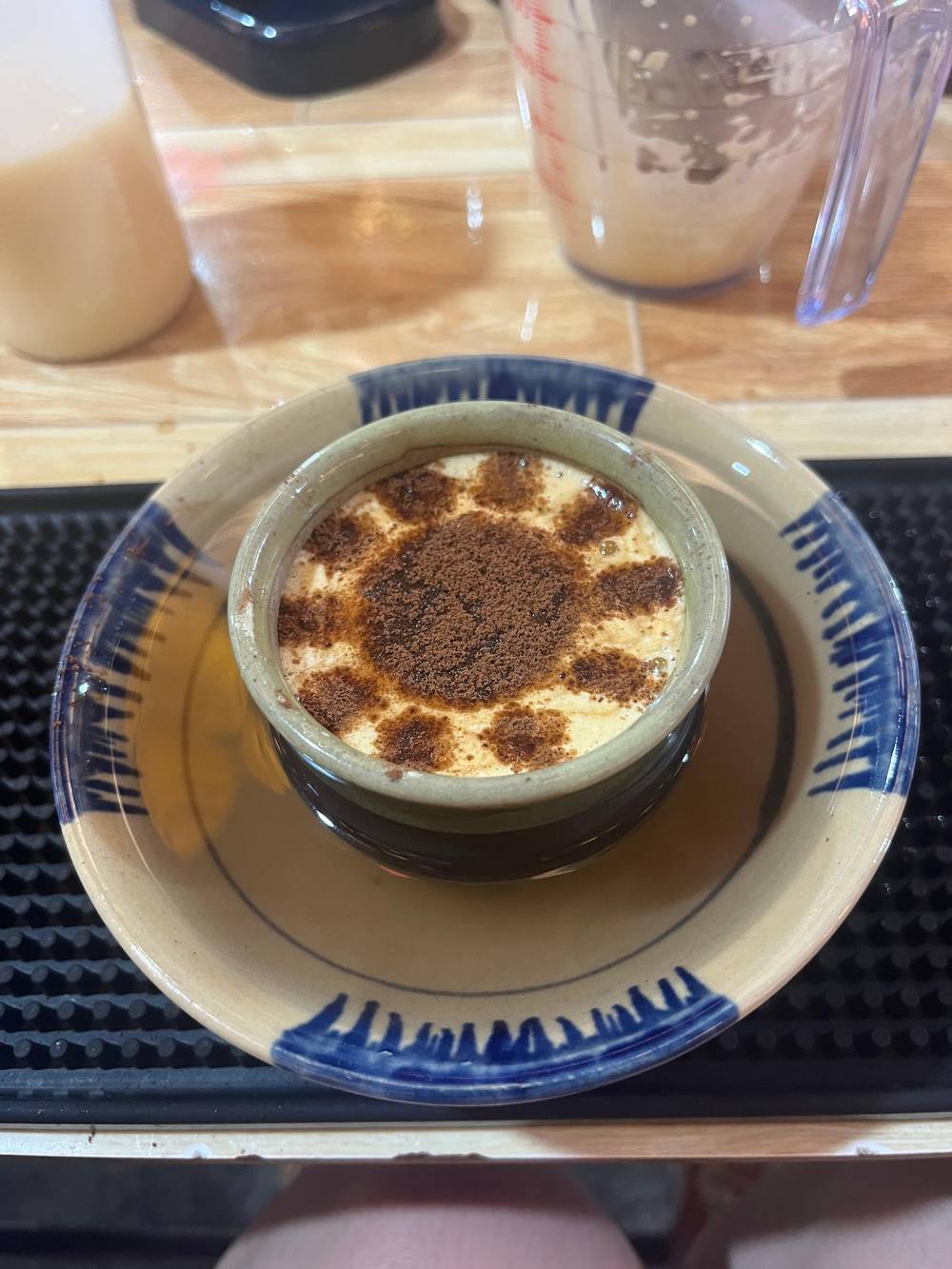
Egg coffee
It carries a custardy yolk foam.30
If I like black coffee
Phin, no milk
It is an acquired taste because of its bitterness.31
If I want something cooling
Coconut coffee
The authority calls it more scoop-able ice cream than drinkable coffee.32
Try it hands-on
Our class
Styles from crop to cup
At a farm
Roast, grind and brew
In Hanoi
Egg coffee and brewing
The robusta that fills those glasses grows in the Central Highlands. The tourism authority sets the scene in the red basaltic soil of Dak Lak and Gia Lai, where rows of robusta plants stretch to the horizon.35 The USDA Foreign Agricultural Service names Lam Dong, Dak Lak, Gia Lai, Kon Tum and Dak Nong as the major coffee provinces of that region.36 Cool-climate Da Lat, in the same Central Highlands, is celebrated for coffee farms and top-quality beans.37
The crop arrived with colonial rule. The authority says the French introduced coffee to Vietnam in the mid-19th century as a commercial crop.12 Today the numbers are large: the Ministry of Agriculture and Environment puts the total coffee area at approximately 730,000 hectares, and USDA says more than 600,000 smallholder households are involved in producing it.38,39 Behind each glass there is usually a small family farm, not a large estate.
For scale, the same USDA report forecasts the 2026/27 harvest at 32.5 million bags, split into 31.4 million bags of robusta and just 1.1 million of arabica.6,23 Robusta dominates the output by a very wide margin. Vietnam's own drinkers take only a part: USDA estimates domestic consumption at 4.9 million bags in 2025/26 and expects 5 million bags the following year, with the rest going to export.25
A short history
Beginning
The French introduced coffee as a commercial crop in the mid-19th century.12
Highlands
The French founded a resort town at Da Lat in 1912 and enlisted K'Ho farmers for the trees.13
Shortage
Fresh milk was scarce and costly, so sweetened condensed milk took over.4
Hanoi
The authority dates egg coffee to 1946, and another page to the late 1940s.14,15
Today
Hanoi ranks among the top global coffee cities and specialty shops are spreading.16,17
What visitors notice first is where the coffee is drunk. The authority describes street cafes where you sit on tiny plastic stools by the road, watching the city pulse by, and calls sitting on newspaper or low stools by the pavement an essential rite of passage.7,40 The same page says coffee is the social equalizer here, with office workers and students and vendors seated at the same height.41
The scene is also changing. The authority notes that specialty shops in Da Nang, Saigon and Hanoi now experiment with single-origin robusta and highland arabica next to the traditional phin drippers.17 Its tourism pages report that Ha Noi ranked among the top global coffee cities in a Food & Wine spotlight.16 USDA adds that demand is rising for specialty arabica, better robusta and modern brewing, and that young consumers favor creative coffee.42
Visitors are part of the story. USDA reports that tourism reached 21 million international visitors in 2025, up 20 percent from 2024, and says that further boosted coffee consumption.43 Many visitors arrive curious about the phin, and a short class turns that curiosity into something you can repeat at home, with a filter packed in a suitcase. A class is a good way to learn the vocabulary of the menu before you order, and our Hoi An class takes about 2 hours and covers 4 styles.
Video
Annie Dang on YouTube · The clip loads only after you tap play.
There is no rushed espresso machine pressure here; it is a slow, meditative drip, capturing the unapologetic, bold, and high-caffeine spirit of the Robusta bean.
At the cafe
Once you know the base, the menu starts to make sense, and every drink on it is a variation on the same dark robusta. Cà phê sữa đá is the iced milk coffee the authority calls a quintessential Vietnamese coffee experience on a hot day.44 Egg coffee is a Ha Noi specialty: a velvety foam of whipped yolk, sugar and condensed milk sitting on strong coffee.30 Hue is famous for salt coffee, a surprising balance of savoury and sweet.45
Further south, the authority points to Ho Chi Minh City for historic cloth-filter stalls and sleek third-wave cafes.46 It also credits the city as the birthplace of bạc xỉu, a milkier cousin of the iced coffee.47 Coconut coffee is another regular, an icy blend of coconut cream, condensed milk and robusta that the authority recommends against a humid afternoon.48 Each of these gets a closer look on its own page.
People wonder what does Vietnamese coffee have in it, and in every style the base is the same dark robusta; the milk, the foam or the cream is what changes. For a first visit the drink to order is the simplest. Ask for iced milk coffee, take your time with the phin and decide afterward whether you want the black version. A class lets you try several back to back, and the Hoi An listing lists black coffee, white coffee, Hue salt coffee, coconut coffee and egg coffee. Each is built on the same base, so what you learn about one transfers to the rest.
FAQ
Robusta, the national tourism authority says, is the traditional bean, with a strong, bitter taste.1
The authority says fresh milk was scarce and expensive in tropical Indochina, and locals turned to shelf-stable sweetened condensed milk.4
In the 2026/27 USDA forecast, robusta accounts for 31.4 million bags and arabica for 1.1 million.23
No. The authority calls egg coffee a must-try Ha Noi drink, especially in the winter months, so the menu is not only iced.49
The Hoi An listing runs for about 2 hours and covers 4 coffee styles.
Sources
Planning a coffee class in Hoi An? Ask a real person here.