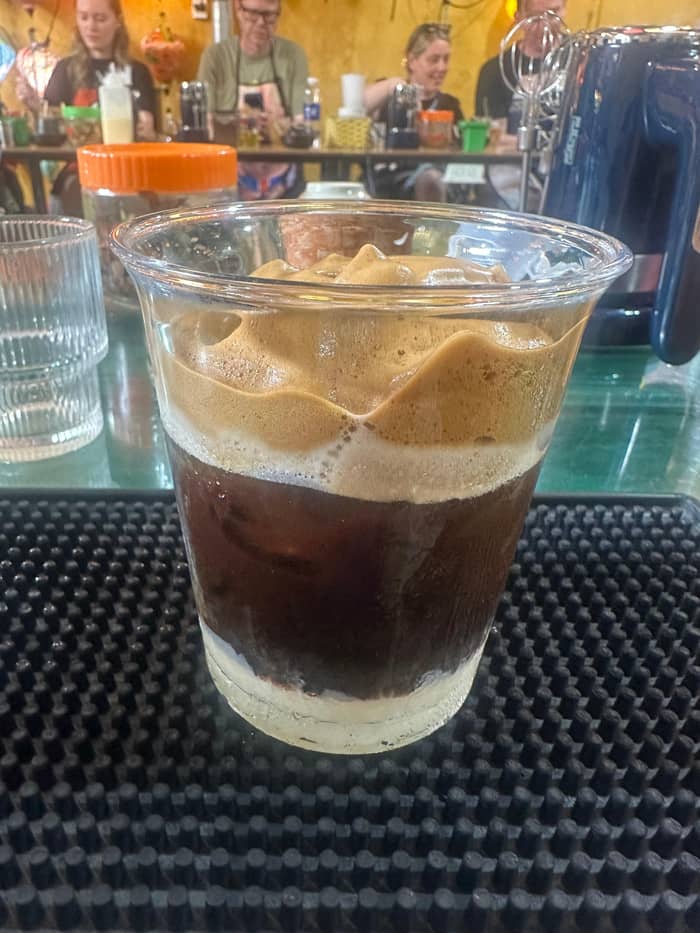
Hoi An
Hoi An coffee class
Styles in a group
- Length2 hours
- Reviews5,442
- Taught inEnglish, Vietnamese
Guides
Language
Currency
See availability$14 and up · free cancelMake-your-mind-up tool
Two taps to a class
Say what you want to learn and where you are, and a matching class appears with its starting price.
The one for you
from $17
The class is built around how Vietnamese coffee differs from other coffee, and covers egg, salt, coconut and phin coffee.
The one for you
from $11
A 2-hour workshop at a farm that covers roasting, grinding and brewing.
The one for you
from $14
A 2-hour class on 4 Vietnamese coffee styles including Ha Noi egg coffee.
The one for you
from $19
A 3-hour workshop where you taste salt coffee and 5 other brews that you make yourself.
The one for you
from $27
A 1.5-hour session on 3 types of coffee, with a phin filter, bạc xỉu and salt coffee.
Vietnamese coffee vs regular coffee comes down to the bean, the slow filter, the roast and the sweet milk. Here is each difference and where the usual cup still wins.
Editorial team, vietnamesecoffeeclass.click · Updated November 16, 2026 · Takes 7 min
Overview
The Vietnamese coffee difference starts with the plant. The US International Trade Commission says commercially grown coffee is typically arabica (Coffea arabica) or robusta (Coffea canephora), and that approximately 60 to 70 percent of the coffee produced worldwide is arabica.2 Arabica is the larger share worldwide, and Vietnam's output is the mirror image: For the 2026/27 harvest USDA expects 31.4 million bags of robusta and only 1.1 million of arabica.1
Arabica is the fussier plant. The trade commission says it is harder to grow, wanting land 610 to 1830 meters up, milder weather and more rain.7 It also reports that arabica is generally priced higher than robusta, because of perceptions of quality and the taste consumers prefer.8 Vietnam is named among the top robusta producers, alongside Brazil, Indonesia, Uganda and India, together responsible for over 90 percent of world supply.9
The tourism authority's verdict on the taste is short: the robusta behind a traditional glass is strong and bitter.10 That bitterness is the first thing a drinker of ordinary cafe coffee notices. It is not a flaw to Vietnamese palates but the foundation, since the same authority says resourceful cafe owners have long dreamed up ways to temper the potent bean and enhance the country's favorite drink.10
Side by side
| Feature | Vietnamese classic | Regular cafe cup |
|---|---|---|
| Bean | Robusta10 | Arabica is the larger share worldwide2 |
| Brew | Phin, by gravity20 | Espresso uses high pressure20 |
| Roast | Often with butter or cocoa4 | Varies by cafe |
| Milk | Sweetened condensed21 | Fresh milk |
| Caffeine | Robusta is higher5 | 113 to 247 mg per 12 oz19 |
Figures come from the tourism authority, the trade commission and the FDA; cells without a figure describe the usual cafe.5
The second contrast is the method. In a regular cafe the coffee is pushed through by a machine while you stand at the counter. In Vietnam the phin takes over, and the tourism authority is blunt about it: there is no rushed espresso machine pressure here, only a slow, meditative drip.3 The brew is steady and unforced, and nothing in it is rushed, which gives the whole drink a different tempo from the quick cup you may grab on the way to work.
Time is the other difference. The authority treats the wait for the brew as part of the enjoyment of the style, which makes the cup a reason to sit down for a while.16 Ordering a Vietnamese coffee when you are late for a train is a mistake, since the glass simply cannot be rushed, and a cafe will not pretend otherwise. A regular cafe coffee is designed to be served in a moment; this one is designed to make you sit.
Equipment is also different, and simple. The phin is a small metal filter basket that perches on the glass, as the authority describes it, and adds that small versions of the filter make good souvenirs.17,18 You need no grinder with a burr set, no steam wand and no scale to get started. The setup is low-tech, and a beginner can follow it at a class, because the skill lies in patience and in the proportions you choose rather than in expensive gear.
The caffeine yardstick
FDA typical caffeine content in 12-fluid-ounce drinks; regular brewed non-specialty coffee shown as its low and high ends.19
The roast is less familiar than the bean. The authority says Vietnamese beans are usually roasted in butter before they go into metal filters, and elsewhere that roasters add a touch of butter or cacao to get a thick brew that tastes of dark chocolate, nuts and wood.4,24 The result is a darker, rounder and more chocolatey cup than a light-roast arabica, so even a plain black glass tastes unlike the cafe coffee you may be used to.
The milk differs too. Where a regular cafe pours steamed fresh milk, the classic Vietnamese cup uses sweetened condensed milk. The authority traces the habit to tropical Indochina, where fresh milk was hard to get and costly, and locals switched to the shelf-stable kind.21 It pairs well with the dark robusta, since the authority says the silky sweetness slices through the bitterness of the dark bean.23 A black version is on the menu as well, though it takes some getting used to.6
Ice is another departure. In a typical cafe an iced coffee is a hot espresso poured over cubes. The Vietnamese version is stirred with a long spoon into a tall glass packed with crushed ice, and an iced cà phê sữa đá in the heat counts as a quintessential experience in the authority's eyes.25,26 Its cousin bạc xỉu keeps the ingredients but tips the balance toward milk, and the authority says it appeals to teenagers who are still warming to robusta.27,28
Taste the difference
Hoi An
Styles in a group
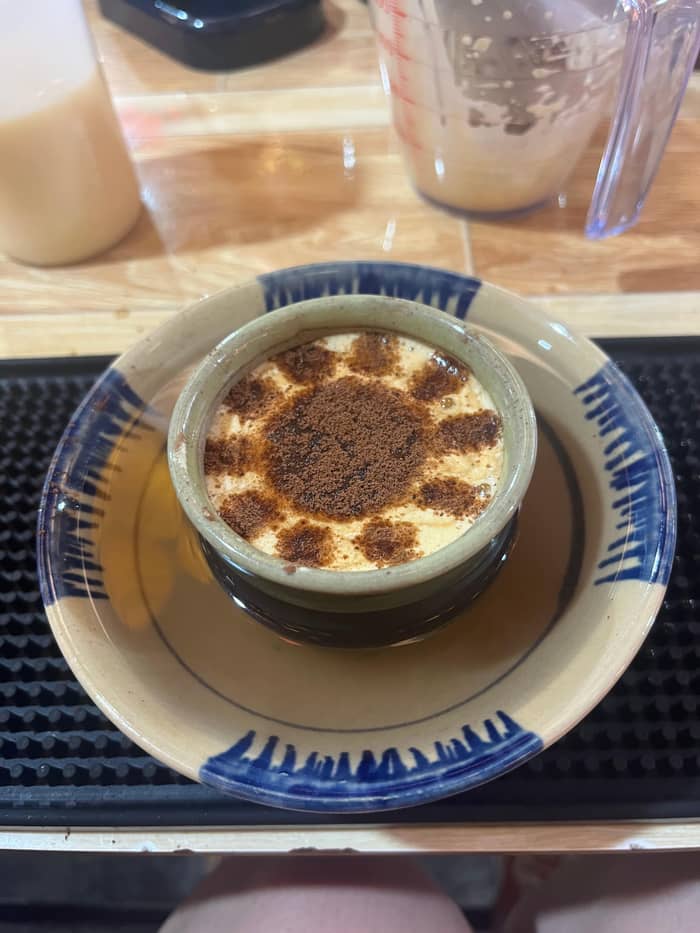
Da Nang
The contrast with other coffee
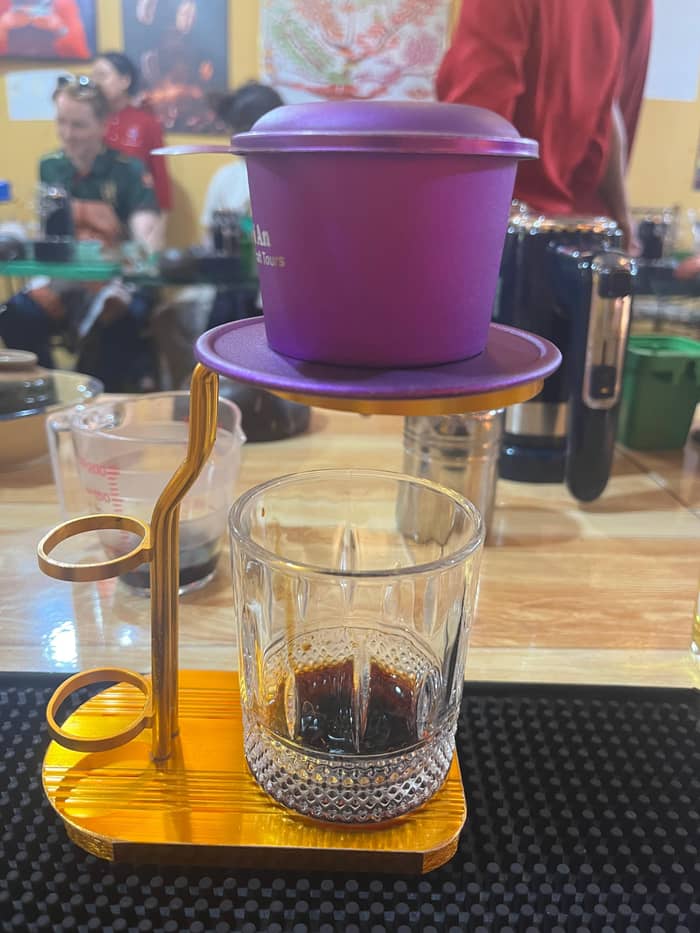
Hanoi
Brews you make yourself
People often ask whether Vietnamese coffee is stronger. The honest answer is that the bean carries more caffeine, but the volume of a glass matters as much. Robusta, according to the US trade commission, carries more caffeine than arabica.5 The US Food and Drug Administration gives the typical range for regular brewed, non-specialty coffee as 113 to 247 milligrams in a 12-fluid-ounce drink, against 37 milligrams for green tea and 71 milligrams for black tea.19
A phin glass has no official caffeine figure, so an exact comparison is not possible, and anyone who quotes one is estimating, so treat the first glass with respect. What can be said is that a glass of Vietnamese coffee uses robusta, which has more caffeine per bean, and that its strength is also governed by how much coffee goes in and how long it steeps. The authority credits the brew with a potent caffeine kick.30
The practical advice is to treat the first glass as stronger than it looks and to watch the clock. The FDA adds that sensitivity differs widely between people, as does the speed at which the body clears caffeine.29 If you usually drink a mild cup, take a small first glass of Vietnamese coffee in the morning rather than late afternoon. Our Hoi An workshop lasts about 2 hours and covers 4 styles, so you can taste the range in a single sitting.
Classes
Set your party and compare four workshops.
Compare all 4 options
Set your party and compare four workshops.
≈
View≈
View≈
View≈
ViewStarting prices as on the booking platform, converted at the ECB reference rate. You see the exact price at booking.
How both beans arrived
Arrival
French planters began growing coffee for sale in the mid-19th century.11
Seeds
Arabica seeds crossed from Africa to Vietnam with the French.12
Highlands
In 1912 the colonists made Da Lat a hill resort and put K'Ho farmers in charge of the trees.13
Robusta
Robusta plantations spread across the red soil of Dak Lak and Gia Lai.14
Now
Specialty bars pour single-origin beans beside the phin.15
It would be wrong to say Vietnam only does robusta. The authority describes a K'Ho coffee farm near Da Lat whose arabica is quite unlike the robusta that fills most Vietnamese glasses, with a generous but balanced flavor and rounded notes of caramel and almond.22,31 Arabica seeds reached Vietnam from Africa with the French, the authority says, and in 1912 the colonists turned Da Lat into a hill resort and relied on K'Ho farmers for the trees.12,13
That cup is judged on a different scale from the street glass. The authority reports K'Ho coffee scoring 84 to 89 in cupping tests, high on the specialty scale.32 Third-wave roasteries in the cities pour such beans: the authority describes minimalist spaces with local arabica from Da Lat and experimental fermentations, and adds that shops in Da Nang, Saigon and Hanoi pour single-origin robusta as well.33,15 A traveler can therefore have both kinds in one trip.
This matters for the comparison, because the question is not always Vietnamese against regular. The Da Lat arabica is a regular cup in spirit, generous but balanced, the street phin glass is a different drink entirely. If a classic iced milk coffee is too strong for you, ask a specialty cafe for a highland pour-over and judge the two against each other. Our Hoi An class is about the phin and the styles built on it; for roasting and grinding, the Da Lat farm class is the closer match.
Video
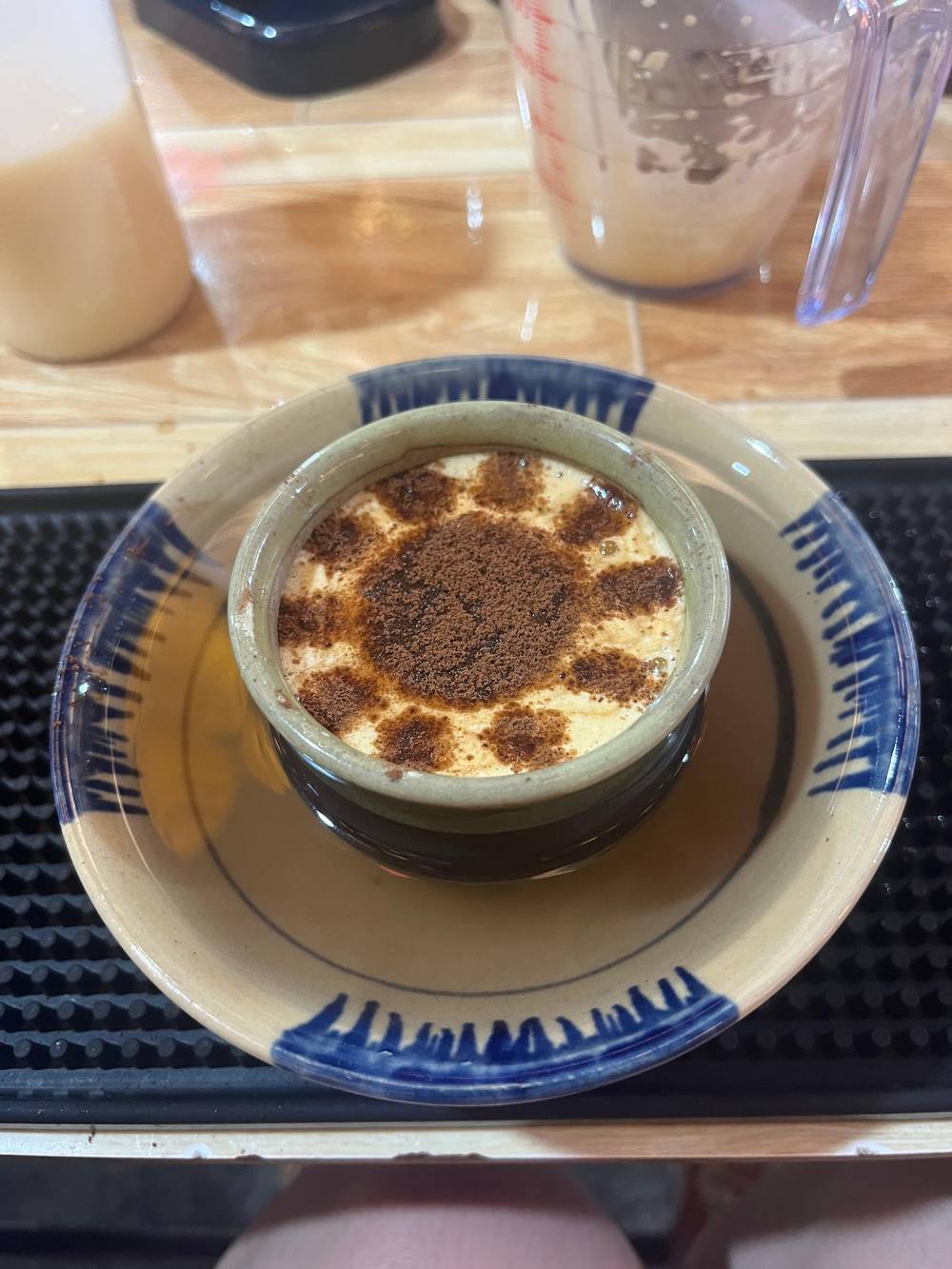
Morgan Eckroth on YouTube · The clip loads only after you tap play.
Robusta is a heartier species with a higher caffeine content than Arabica and is better able to handle higher temperatures, lower altitudes, and drought.
Before you compare
The gap is narrowing from both sides, as tastes inside Vietnam change. In the USDA's reading, demand inside Vietnam is climbing for specialty arabica and better robusta, and younger drinkers want creative coffee.34 The same report notes a move toward brewing at home, with premium beans bought for modern methods and smart machines.35 The regular cup is arriving in Vietnamese homes as well.
Exports tell the same story from the other end. USDA says soluble and roasted coffee make up approximately 13 percent of Vietnam's coffee exports, and that approximately 30 percent of the current coffee area is 20 years or older and needs replanting to keep quality up.36,37 Vietnamese drinkers themselves took an estimated 4.9 million bags in 2025/26, USDA says, a fraction of the 28.5 million bags it estimates were exported.38,39
For a visitor the lesson is that you can choose. Order a classic glass to taste the national tradition, and a specialty arabica later in the day to taste what the new generation is doing. A class in Hoi An, Da Nang or Hanoi lets you do the first part hands-on, and the cafes near any of them will happily show you the second. The Da Nang workshop is built around how Vietnamese coffee differs from the rest of the coffee world.
FAQ
Robusta carries more caffeine than arabica, but no official figure exists for a phin glass.5
That is the FDA's typical range for regular brewed, non-specialty coffee.19
The tourism authority calls black Vietnamese coffee an acquired taste because of its bitterness.6
The Da Nang workshop is built around the contrast with other coffees, and the Hoi An class covers 4 styles.
Sources
Planning a coffee class in Hoi An? Ask a real person here.