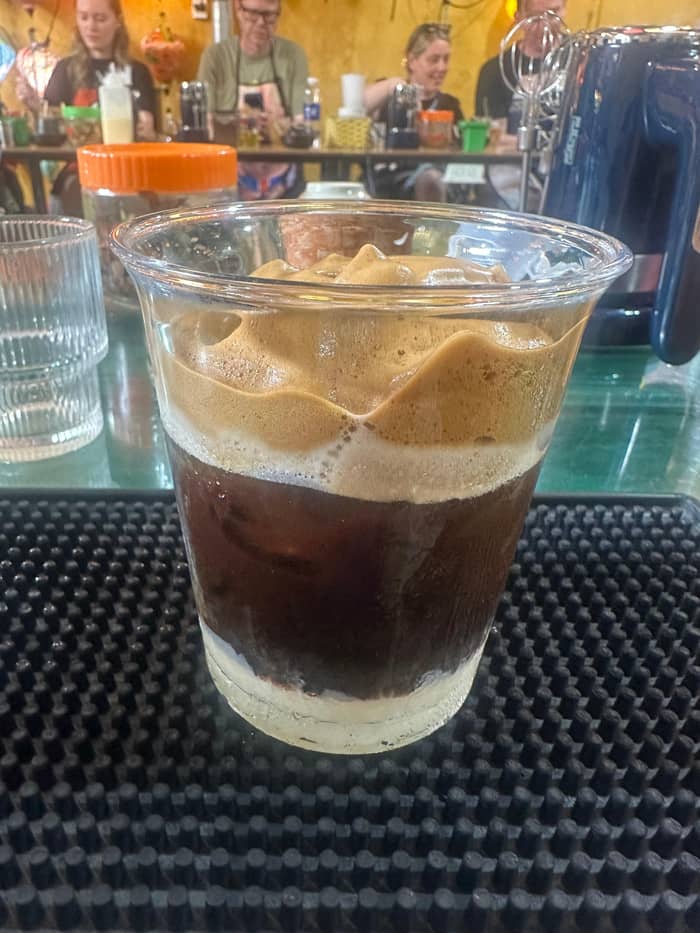
Booked here
Hoi An culture class
Several coffees in a lantern room
- Length2 hours
- LanguageEnglish, Vietnamese
- Reviews5,442
Guides
Language
Currency
See availability$14 and up · free cancelMake-your-mind-up tool
Hoi An coffee class
★ 4.9 · Rated by 5,442 guests
Two questions, one city
Say where you are heading and the class that fits appears with its starting price.
The one for you
from $14
A class of 2 hours with 5,442 reviews, the most of any class we found.
The one for you
from $21
A small-group class in a local home that makes 4 to 6 coffees, egg coffee among them.
The one for you
from $27
A workshop of 1.5 hours that teaches bac xiu, salt coffee and a phin con panna.
The one for you
from $11
A roasting and tasting workshop of 2 hours at a farm in the hills near Da Lat.
The one for you
from $18
A small class of up to 8 guests that brews phin, egg, salt and coconut coffee.
The one for you
from $17
A workshop with egg, salt, coconut and phin coffee, rated by 771 guests.
Coffee classes run in every big Vietnamese city, and each teaches a different local drink. Compare what you learn, what you pay and when to go before you choose.
Editorial team, vietnamesecoffeeclass.click · Updated November 16, 2026 · Takes 8 min
Overview
A coffee class is rarely the reason for a trip, so the sensible way to choose a city is to start from the route you already have. The national tourism authority warns that train rides from Hanoi to Ho Chi Minh City can run up to 30 hours and that 16 hours is quite common from Central Vietnam to either point.1 A class that needs a detour of that size is not worth it.
The same source says that flying is the convenient way to link cities, with daily flights to all of the top destinations.2 If you are already moving between cities, add a class to each stop only if the drink differs. A class in Hoi An and a class in Hanoi both teach egg coffee, so repeating it is pointless, while the salt coffee of Hue and the bac xiu of Ho Chi Minh City add something new.
Each class below is checked against its own listing record, and the prices are from-prices, not quotes. We name the styles that each listing says it teaches and the length it lists, and we leave the rest to the booking page. A table later in this guide puts the cities side by side so you can compare them at a glance.
Side by side
| City | Signature | From | Length |
|---|---|---|---|
| Hoi An | Black, egg, salt, coconut | $14 | 2 hours |
| Hanoi | Egg coffee, 4 to 6 brews | $21 | 1 to 2 hours |
| Ho Chi Minh City | Bac xiu, salt coffee | $27 | 1.5 hours |
| Hue | Phin, egg, salt, coconut | $18 | 1.5 hours |
| Da Nang | Egg, salt, coconut, phin | $17 | 1.5 to 5 hours |
| Da Lat | Arabica roasting | $11 | 2 hours |
These are starting prices per listing; confirm the exact fare on the booking page for your date.
Hoi An is where this site starts. The class we book lasts 2 hours, begins from $14 and has 5,442 reviews averaging 4.9, far more than any class we found in another city. Five drinks are on the Hoi An menu, from black and white to salt, egg and coconut, so a single class tastes its way through several regional styles.
The town helps: its old core has carried UNESCO World Heritage status since 1999, and the official pages describe its cafes as full of tangible charm.3,4 Classes sit among the lantern workshops and cooking classes that the same source calls popular.5 If your route includes the central coast, this is the easiest city for a first class.
Weather decides the timing: the wet, cool season in Hoi An starts in September and lasts until January, and warm to hot clear weather follows until August.6 A class works in either spell, but in the wet months it becomes the plan for the afternoon you would otherwise lose. Our separate pages compare Hoi An classes by price and by style if you want the detail.
Popularity
Review counts of the most reviewed class we found in each city, as the listings show them.
Hanoi is the city for egg coffee: official tourism pages treat it as a local must-try, best in winter, and place the finest cups in the capital.8,9 The tale it passes on is that egg yolk replaced scarce milk after the war.10 A class here teaches the drink in the city where it is a local habit, and the cup you make is the one you will see on café tables outside.
The most reviewed class we found is a small-group session in a local home that is offered from $21, with 4 to 6 coffees on the menu and 1,098 reviews at 4.9. A 3-hour workshop with a long menu is offered from $19, with 1,058 reviews, and it ends with coffee cocktails made with jam and local wine for guests who want a longer session.
Winter matters in the north. The official guide says Hanoi turns surprisingly cold from late December until March, with lows of 10 degrees, while September to November brings cool days of around 25 degrees and sunny skies.11,12 A warm class room is a fine place to spend a chilly afternoon, and a separate page on this site compares the Hanoi classes in detail.
By city
Booked here
Several coffees in a lantern room
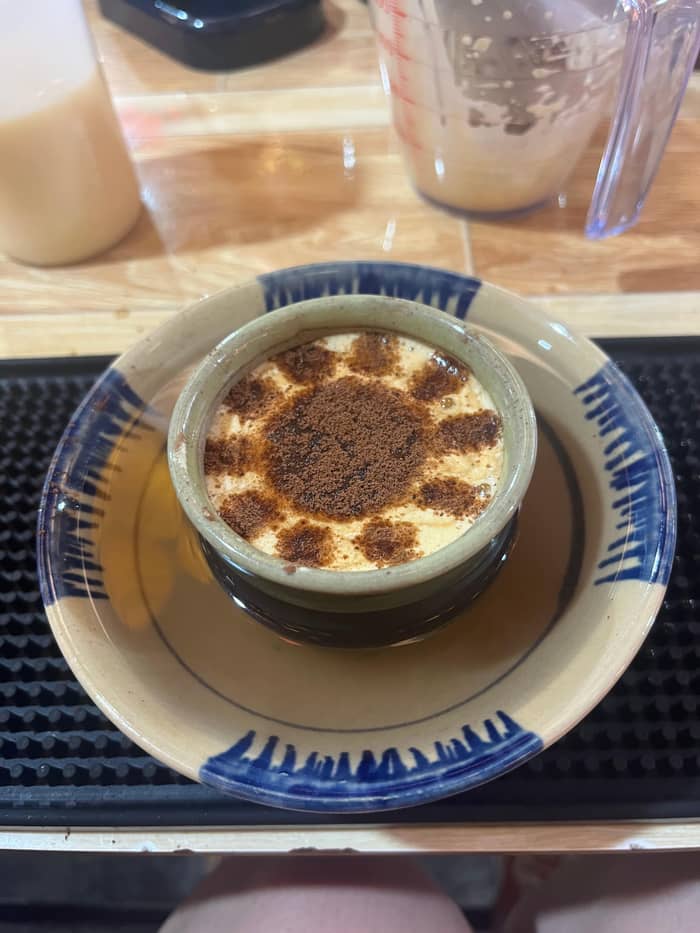
Egg coffee
Egg coffee where it began
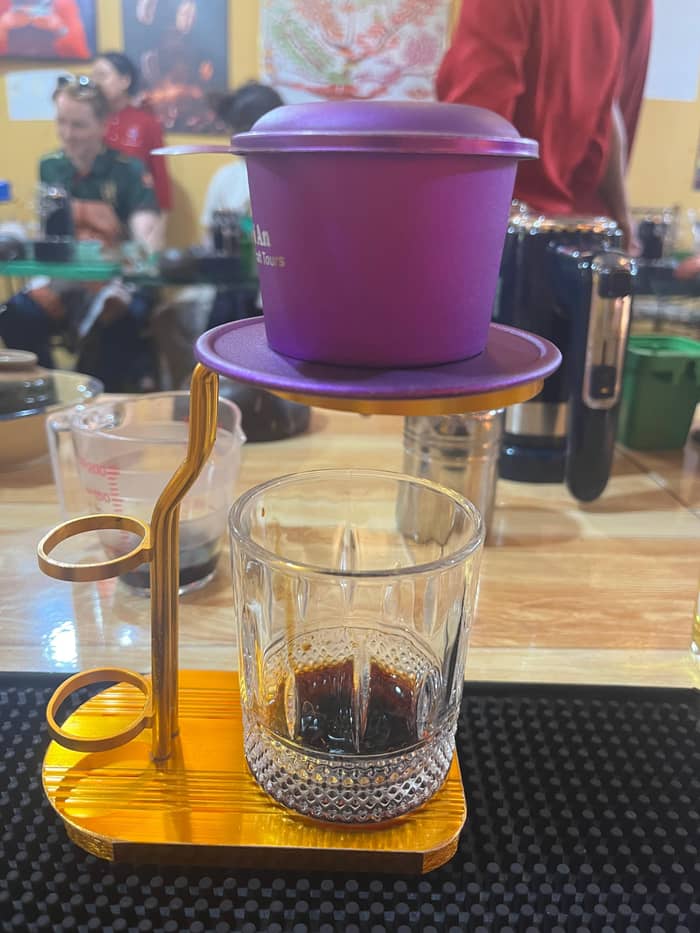
Farm option
Roast arabica on the farm
Ho Chi Minh City has plenty to teach. The national tourism authority calls it Vietnam's sugar capital and the birthplace of bac xiu, the sweet milk coffee.7 It also describes ca phe sua da as brewed coffee layered over sweetened condensed milk with crushed ice.14 A Vietnamese coffee class in Ho Chi Minh City therefore opens with the sweetest drinks.
A beginner workshop at a coffee space in District 1 teaches 3 coffees: bac xiu, the salt coffee of Hue and a phin con panna, and it is offered from $27 for 1.5 hours with 134 reviews averaging 4.9. An egg coffee class at the same kind of space is offered from $24 for 1.5 hours. A Vietnamese coffee making class in Ho Chi Minh City can also be a small home workshop, as in a 2-hour session in a local home from $5 that brews 5 coffees.
Egg coffee is rarer here: the tourism authority calls it a rare find in the city, so a class that teaches it fills a gap.15 The weather is steady, with temperatures around 30 degrees all year and a wet season from May to November that brings an afternoon downpour lasting a few hours.13 A class is a good use of that downpour.
Price your group
Set the number of guests and see a class priced in each city.
Compare all 4 options
Set the number of guests and see a class priced in each city.
≈
View≈
View≈
View≈
ViewStarting prices as on the booking platform, converted at the ECB reference rate. You see the exact price at booking.
A route north to south
In Hanoi
A small-group home class makes 4 to 6 coffees from $21.
In Hue
A class for up to 8 guests brews 4 coffees from $18.
In Hoi An
The class we book lasts 2 hours and is offered from $14.
In Da Nang
A workshop with 771 reviews is offered from $17.
In Da Lat
A roasting workshop lasts 2 hours and is offered from $11.
In Saigon
A beginner workshop of 1.5 hours is offered from $27.
Hue offers a small class that brews 4 coffees, phin, egg, salt and coconut, with robusta beans, for up to 8 guests, from $18 for 1.5 hours. It has 101 reviews averaging 4.9. The city is also known for pavement cafes: the official source points to those at the crossroads of Truong Dinh and Pham Hong Thai.16
Da Nang has the biggest class outside Hoi An and Hanoi: a workshop that teaches egg, salt, coconut and phin coffee, is offered from $17, takes between 1.5 and 5 hours by option and has 771 reviews averaging 4.8. Its menu contains eggs and milk, so tell the provider about allergies. A smaller classic class near My Khe Beach is offered from $19 and caps the group at 7. If you are comparing a Vietnamese coffee making class in Da Nang with Hoi An, remember the towns are close and the Hoi An class has far more reviews.
The tourism authority describes Cafe Long in Da Nang as a place where elders gather around seven for a daily chat over strong robusta brewed in tin drip filters, and that scene is part of what a class lets you recreate.17 For weather, Hue is cool to cold, rainy and cloudy from September to February, and warm to hot with clear skies from March to August.18
Video
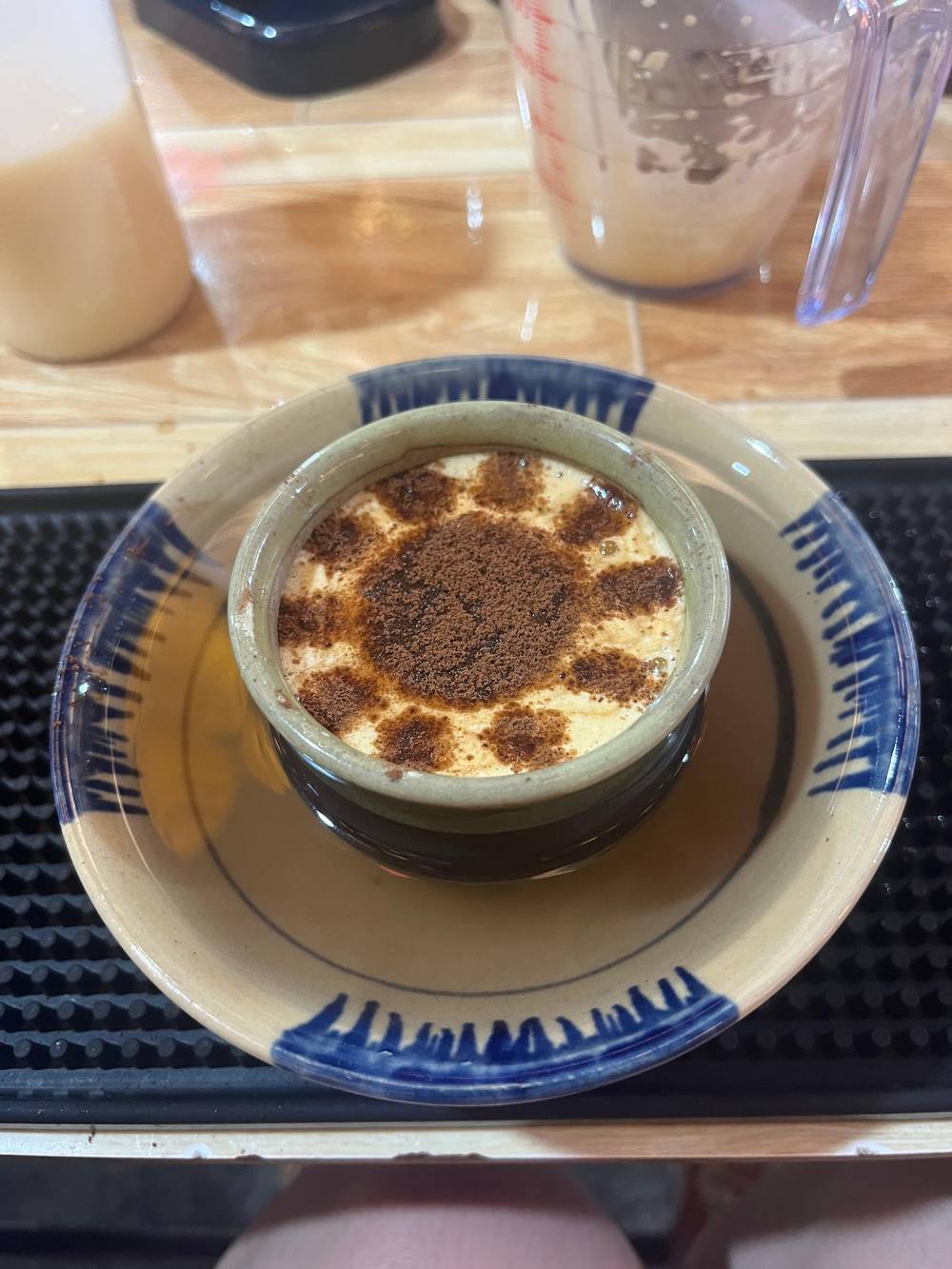
Roadmap2Adventures on YouTube · The clip loads only after you tap play.
Ho Chi Minh City is Vietnam’s sugar capital, and the birthplace of bac xiu.
Before you choose
Da Lat is the place to meet the bean, not just the cup. Da Lat sits in the Central Highlands, where most of Vietnam's coffee grows, and the country ranks second in the world for production, say the official pages.19 It adds that Da Lat grows world-class arabica and is the only region with the right climate for that delicate bean.20
A roasting and tasting workshop at a farm in the hills is offered from $11, lasts 2 hours and has 136 reviews averaging 4.9. The farm lies about 20 km and 40 minutes by car from the center, and a taxi transfer is offered. A farmer's cafe in the center of Da Lat offers a tasting of 5 coffees from the farmer's own farm, with options from 1.5 to 7 hours and 117 reviews.
Da Lat is cooler. The official guide describes steady temperatures through the year, with a rainy season from April until October.21 Choose Da Lat if you want to see coffee fruit on the tree and roast beans, and choose another city if you want to practice the filter and the foam. A farm tour covers the whole process of production, starting in the plantations.22
On price the cities spread out, but the spread hides the format. The lowest from-prices in our set are $5 for a small home workshop in Ho Chi Minh City and $11 for the Da Lat farm, while the Hoi An class we book is offered from $14. Hanoi is offered from $12 for a villa workshop and rises to $21 for the small-group class.
On volume, Hoi An leads by a wide margin with 5,442 reviews, followed by Hanoi with 1,098 and Da Nang with 771. A bigger review base is not a better class, but it is a steadier signal of what you will get, so weigh it with the style you want. Smaller cities have fewer reviews and, in a few cases, perfect scores on a handful of guests.
On style, each city has its signature: egg coffee in Hanoi, salt coffee and the Hue tradition in the center, bac xiu in the south, arabica in the highlands.9,7,20 If you are not sure, the Hoi An class sits in the middle of that range, teaching egg, salt and coconut coffee in a single session of 2 hours, so a traveler with time for only a single class loses little by choosing it.
Suppose you travel from north to south. In Hanoi, book the small-group home class from $21 in the cooler months and learn egg coffee in the city that made it famous.9 Fly on to central Vietnam rather than take the train, since the long rides are measured in many hours.1 In Hue, a class from $18 adds salt coffee.
In Hoi An, take the 2-hour class from $14 and spend the evening by the river, where candle-lit lanterns are set afloat on the night of the lunar month's 14th day.23 If you detour to Da Lat for the farm, the roasting workshop from $11 turns a coffee trip into a bean trip. Finish in Ho Chi Minh City with the beginner workshop from $27 for bac xiu and a phin con panna.
That is a lot of classes. Choose a few, and a simple rule keeps the choice clean: pick the cities where the local drink is different from the one you already learned. Book each class with free cancellation, which every listing here offers, so a delayed flight or a change of mind does not cost you the fare.
FAQ
With 5,442 reviews at 4.9 it dwarfs every class we found elsewhere.
A beginner workshop is offered from $27 for 1.5 hours, and an egg coffee class is offered from $24.
A workshop at a farm near Da Lat is offered from $11 and teaches how arabica beans are grown, processed, roasted and brewed.
It is offered from $17 and teaches egg, salt, coconut and phin coffee.
A small home workshop is offered from $5, though the Da Lat farm is offered from $11.
Egg coffee is taught in Hanoi, Hoi An and Hue, so repeat only the drinks you have not yet made.
Sources
Planning a coffee class in Hoi An? Ask a real person here.