Hoi An
Hoi An coffee class
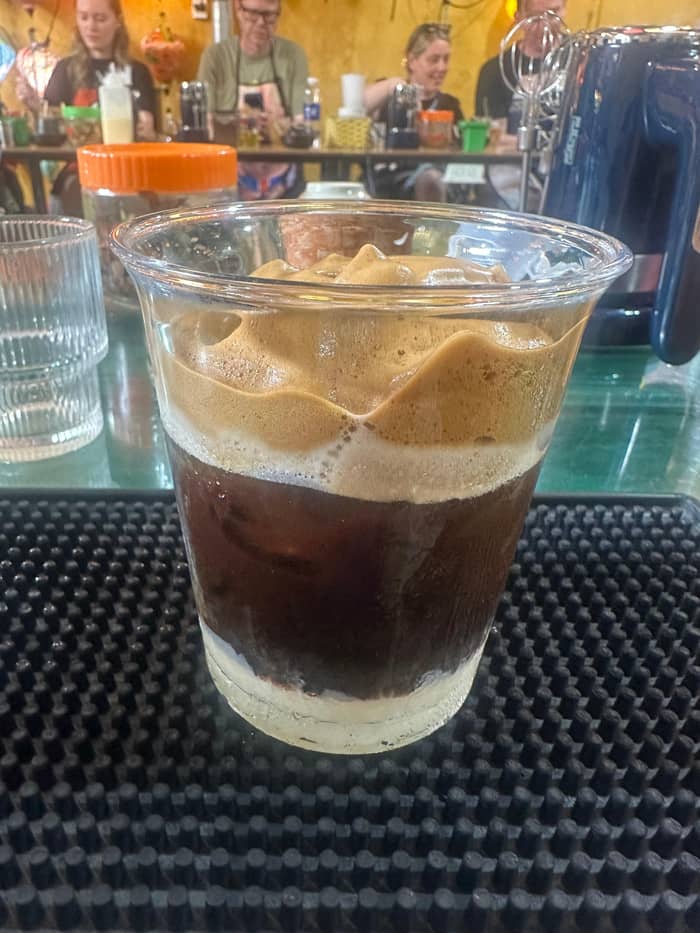
Black, white, salt, coconut, egg
- Length2 hours
- Reviews5,442
- Taught inEnglish, Vietnamese
Guides
Language
Currency
See availability$14 and up · free cancelMake-your-mind-up tool
Two taps to your cup
Say how you take your coffee and how long you have, and a class that fits appears with its starting price.
The one for you
from $19
A 3-hour workshop where you make salt coffee and 5 other brews, a wide tasting for strong coffee lovers.
The one for you
from $27
A 1.5-hour session where you make bạc xỉu, the milky style, and salt coffee with a phin filter.
The one for you
from $14
A 2-hour class with 4 styles including egg coffee, taught in English and Vietnamese.
A balanced answer for first-time drinkers: what the cup tastes like, what the health agencies say about caffeine, who should take care, and which Vietnamese styles are the gentlest.
Editorial team, vietnamesecoffeeclass.click · Updated November 16, 2026 · Takes 7 min
Overview
Is Vietnamese coffee good? For most people the answer depends on whether they like a dark, bold cup. Drunk black, it is an acquired taste, in the words of the national tourism authority, and plenty of locals add condensed milk or ice to take the edge off.1 If you drink your coffee black and strong at home, you may love it straight. If you prefer milky, mild cups, start with the sweet versions and work your way toward the black.
What you taste comes from the bean and the roast. Roasting robusta with a little butter or cacao gives chocolate and nut notes with a woody edge, per the authority.7 In its telling the finished phin cup is bold and chocolatey and delivers a strong caffeine jolt.8 That is a different pleasure from fruity, floral arabica, and it can surprise anyone who expected the familiar cafe cup.
The sweet end of the menu is where many newcomers settle. Sweetened condensed milk is the usual counterweight, with a silky sweetness that tames the earthy bitterness of dark robusta.9 On a hot day the iced version, cà phê sữa đá, is what the authority treats as the defining Vietnamese coffee moment.10 The drink is easy to like for that reason. Fans argue endlessly about why Vietnamese coffee is the best coffee in the world, and no authority ranks coffees, but the case they make rests on the bold bean, the sweet milk and the slow ritual.
Taste map
| Style | How it tastes | What softens it |
|---|---|---|
| Black phin | Bold, bitter, strong18 | Nothing added1 |
| Iced milk coffee | Sweet over dark robusta19 | Condensed milk9 |
| Bạc xỉu | Milk first, coffee second5 | More milk5 |
| Salt coffee | Savoury and sweet20 | Salted cream6 |
| Yoghurt coffee | Sour, bitter, sweet21 | Yoghurt22 |
| Egg coffee | Like liquid tiramisu23 | Egg foam11 |
Tasting notes as the national tourism authority describes each drink.19
Yes, and plenty. Does Vietnamese coffee have caffeine? The bean grown most in Vietnam is robusta,12 and the US International Trade Commission says robusta has a higher caffeine content than arabica.2 The tourism authority is just as direct, crediting the phin brew with a potent caffeine kick for body and mind.8 The European Food Safety Authority describes the effect: caffeine acts on the central nervous system, and moderate amounts leave you more alert and less sleepy.13
A figure helps put it in perspective. In the US Food and Drug Administration's table, a 12-fluid-ounce green tea has 37 milligrams of caffeine and a black tea 71 milligrams, while regular brewed, non-specialty coffee has 113 to 247 milligrams.14 No official source publishes a number for a phin glass, because the dose depends on how much coffee goes into the filter and the size of the glass. Treat a classic Vietnamese glass as at least as strong as a regular brewed cup.
The tourism authority also warns, in a feature about a Da Lat farm, that the strongest cups of robusta served across Vietnam can turn you from euphoric to despairing within an hour.15 Take that as a nudge to pace yourself. EFSA lists coffee and cocoa among the natural sources of caffeine, together with tea leaves, guarana and kola nuts, and a Vietnamese coffee adds to the total from every other source in the day.16
The FDA's guidance is the clearest benchmark. For most adults it cites 400 milligrams a day, roughly two or three 12-fluid-ounce cups of coffee, as a level not generally tied to adverse effects.3 The agency also stresses that what counts as too much varies from person to person with body weight, medications, medical conditions and individual sensitivity.25 People differ widely in how sensitive they are and how quickly they clear caffeine from the body, the agency notes.24
The FDA lists the symptoms to watch for: increased heart rate, heart palpitations, high blood pressure, insomnia, anxiety, jitters, upset stomach, nausea and headache.26 If you notice any of them after a couple of glasses of robusta, scale back and talk to a health professional if the symptoms persist. A small glass on your first morning is a sensible way to find out where you stand.
One practical point: cafes rarely tell you how much caffeine is in a drink, and street stalls never will. The FDA points out that cafes and restaurants have no legal duty to state the caffeine in their drinks.27 You will not see milligram counts on a street stall menu. The sensible approach is to count glasses rather than guess milligrams, and to leave a gap of a few hours between them if you are sensitive.
Taste before you decide
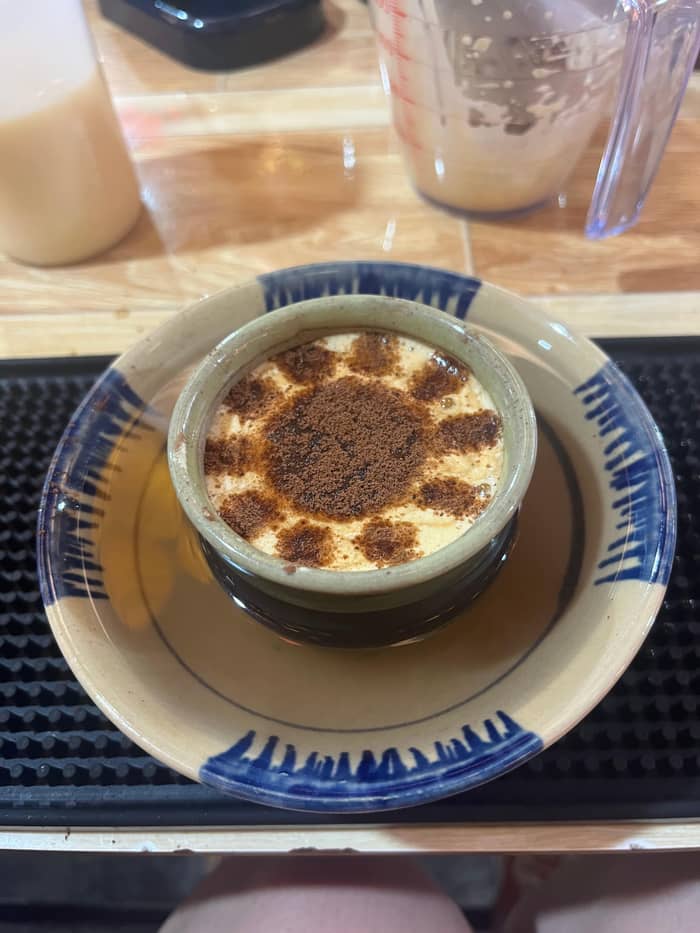
Hoi An
Black, white, salt, coconut, egg
Hanoi
Salt, coconut and egg coffee
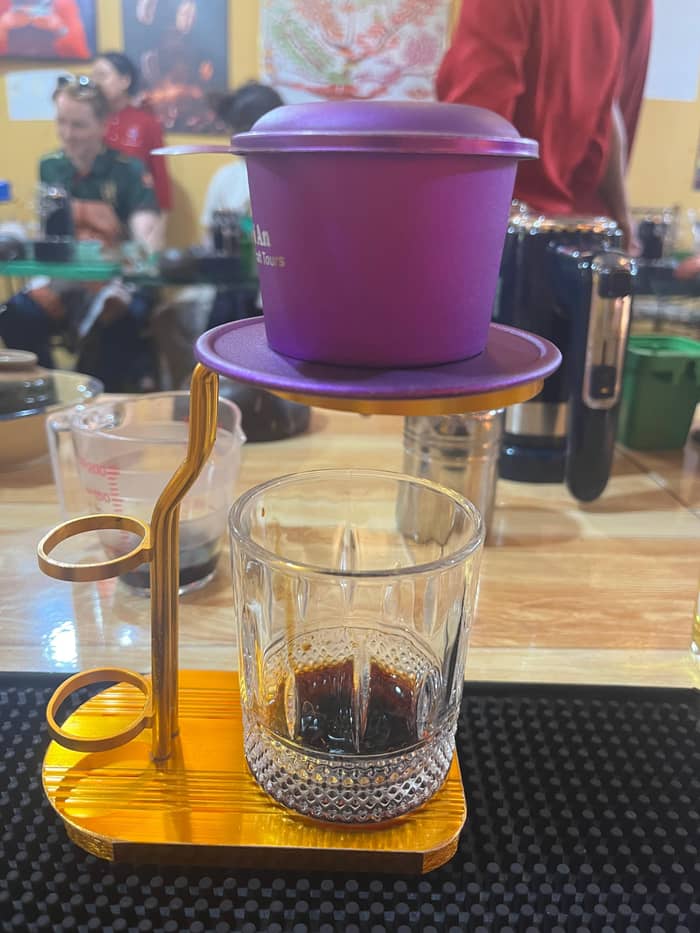
Saigon
Bạc xỉu, salt coffee, phin
Some people should talk to a doctor before treating Vietnamese coffee as a daily habit. The FDA recommends that anyone who is pregnant, trying to become pregnant or breastfeeding talk to their health care provider about whether they need to limit caffeine.4 The same applies to people who take medications or have a medical condition that raises sensitivity, since both can change how caffeine acts on the body, according to the FDA.25
Decaf is not a full escape. The FDA says decaffeinated coffees still contain some caffeine, and that a typical 8-fluid-ounce cup of decaf holds 2 to 15 milligrams.17 A traveler who avoids caffeine is better off ordering a milk or fruit drink, or a style where coffee is a small part of the glass. Ask the cafe before you order, especially in a small street cafe, and expect the answer to be that the menu is coffee-based.
If you decide to cut back after a trip, do it gradually. The FDA says that if you are used to drinking caffeinated beverages every day and want to reduce, it is best to cut back slowly, because withdrawal is not considered dangerous but can be unpleasant.28 The agency also notes that your body handles caffeine that occurs naturally in coffee the same way as caffeine added to a product, so a strong Vietnamese coffee counts in your total just like an energy drink.29
Try before you judge
Set your party and compare three workshops.
Compare all 3 options
Set your party and compare three workshops.
≈
View≈
View≈
ViewStarting prices as on the booking platform, converted at the ECB reference rate. You see the exact price at booking.
A strength ladder
Start
Begin with the milkiest style on the menu.5
Next
Move to a cold sữa đá, where condensed milk cuts the bitterness.9
Then
Try the Hue style, where salt suppresses bitterness.6
Later
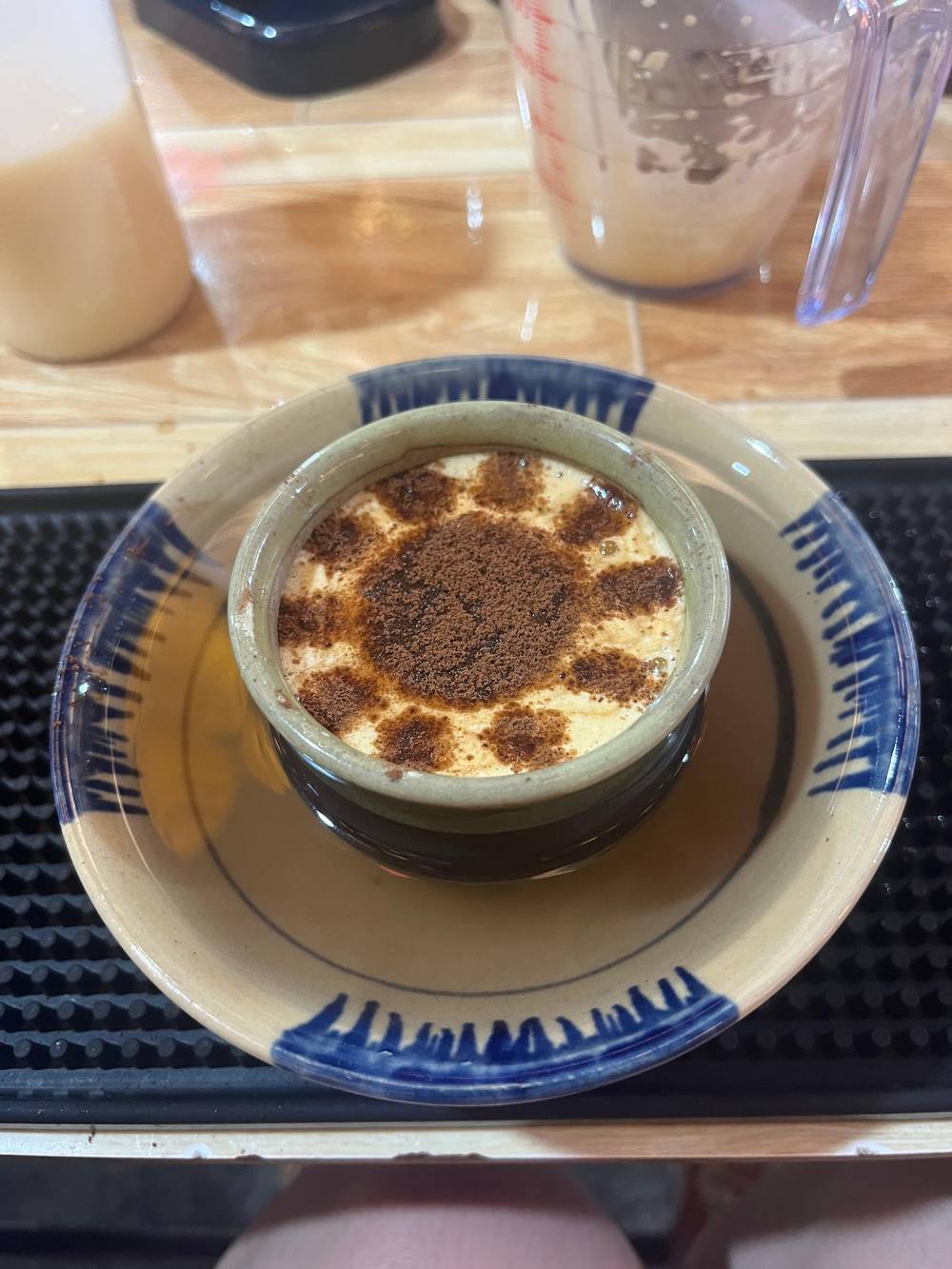
A dessert-like cup, topped with whipped yolk foam.11
Last
Finish with the black cup, an acquired taste, when you feel ready.1
If the black cup is too fierce, there is a ladder of gentler drinks. Bạc xỉu is the gentlest rung of the ladder: milk leads and coffee follows.5 Teenagers who are still getting used to robusta's bitterness are among its fans, according to the authority.30 Ho Chi Minh City is credited as its birthplace.31 It is a forgiving style for a nervous first-timer or anyone who wants a smaller caffeine hit.
Salt coffee is the next step. The authority says the salty cream suppresses the natural bitterness of the beans while accentuating their latent caramel sweetness, and that it comes from Hue.6,20 Yoghurt coffee is another surprise, with tangy yoghurt, bitter coffee and sweet condensed milk in a mix the authority finds mouthwatering.21 Both soften the cup without hiding the robusta behind it.
For a dessert-like cup, egg coffee is the Hanoi answer. The authority calls it a Ha Noi must-try, particularly in winter, and suggests stirring the foam through gradually and taking small sips.32,33 A hands-on class lets you try several of these gentler styles in one sitting. Our Hoi An class, about 2 hours long, takes you through a black cup, a white cup and the Hue, coconut and egg specials.
Video
Hal On Earth on YouTube · The clip loads only after you tap play.
When consumed by humans, caffeine stimulates the central nervous system, and in moderate doses increases alertness and reduces sleepiness.
Drink wisely
The good reputation is not only about taste, and it is growing. The authority notes that Food & Wine spotlighted Ha Noi as one of the world's leading coffee cities.34 USDA also sees younger Vietnamese consumers leaning toward creative coffee.35 The cup is changing as fast as its reputation, and a visitor today can find both the classic street glass and a modern specialty pour within a short walk.
There is also the setting. The authority describes coffee as the social equalizer, with people from all walks of life seated side by side on the same low stools.36 A cup of bold, sweet, slow coffee beside a busy street is a large part of what visitors remember, and it is the reason a Vietnamese cafe visit is easy to recommend even to someone who is lukewarm on the bean itself. You are paying for time on a low stool as much as for the drink.
So is it good? If you want a quiet, light, filtered cup, you may find it too bold. If you want a strong, sweet, ritual drink with plenty of variety, it is hard to beat for a trip. Judge it in small steps: begin with a gentle style, add a black phin if you enjoy it, and keep count of the glasses. A class is a low-pressure way to decide, because you taste each style yourself and then know what to order the next day.
FAQ
It is the milky one, with coffee in the supporting role.5
Not unless it is sweetened: the authority says black coffee is an acquired taste.1
The FDA recommends talking to a health care provider about limiting caffeine if you are pregnant or breastfeeding.4
A typical 8-fluid-ounce cup of decaf holds 2 to 15 milligrams, the FDA says.17
The FDA lists heart palpitations, insomnia, anxiety, jitters and headache among the symptoms.26
Sources
Planning a coffee class in Hoi An? Ask a real person here.